By the Witness Radio Team
Nairobi, Kenya: Prof. Damilola Olawuyi, Chairperson of the United Nations Working Group on Business and Human Rights, has urged African countries to take an active and leading role in international treaty negotiations to ensure that global treaties address the continent’s unique challenges, warning that passive participation could result in agreements that overlook Africa’s needs.
He said that in international law, you don’t get what you deserve; you get what you negotiate.
Delivering the Keynote at the Dialogue, Prof. Olawuyi stressed that African governments are not sufficiently engaged in negotiations to create a legally binding international treaty on business and human rights—a lack of involvement that could undermine African interests.
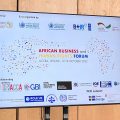
The two-day dialogue, convened by DCA and partners, has the theme: “Beyond Compliance: Strengthening Accountable and Rights-Centered Supply Chains in East and Horn of Africa.” It brings together governments, businesses, civil society organizations, development partners, and human rights defenders. Participants discuss how growing investments can better align with human rights standards and responsible business conduct.
Building on the momentum of the 2023 inaugural conference in Kampala, the event aims to shift discussions from commitments to implementation. It focuses on rapidly expanding investments in land-based sectors and their impact on communities.
He reiterated that the persistent absence of African states from these talks may result in global rules that ignore African priorities.
He warned the end result might be an instrument that does not reflect African priorities and interests. It could contain pre-packed solutions that impose higher environmental, sanitary, climate, and ESG standards on African products, limiting their competitiveness and market access.
He urged the EAC, AU, and member states to unite around a common position in negotiations, underscoring the importance of African leadership in ensuring investments support both economic growth and human rights.
Prof. Olawuyi argued that the absence of binding international standards continues to undermine efforts to hold corporations accountable for human rights abuses, particularly in sectors such as agribusiness, mining, and large-scale land-based investments.
He cited an upcoming report on agribusiness, food security, and human rights. He said investment-driven agricultural projects in several countries continue to be linked to child labor, sexual exploitation, modern slavery, gender injustice, forced displacement, land grabbing, and other rights violations.
He recommended that National Action Plans must be rigorously implemented across all sectors, including agribusiness, to effectively address human rights abuses.
The concerns voiced by the UN expert were also reflected in discussions throughout the forum. Karen Poore, Country Director for DanChurchAid Kenya (DCA), spoke on behalf of the event host. She called on governments, businesses, civil society organizations, and local communities to work together proactively, urging them to take concrete steps that ensure investments respect human rights and deliver equitable benefits for all involved.
Poore described DCA’s role as both a convener and bridge-builder, creating spaces where different actors can engage honestly on difficult issues surrounding business conduct and human rights.
She said spaces like this, where honesty and constructive challenge are possible, are important. More transparency and openness about root causes, and a willingness to move beyond appearances, are needed, as business and human rights are evolving quickly and new standards are shaping expectations.
She stressed that responsible business conduct is not only about accountability but also about creating fairer and more sustainable economic opportunities.
“Access alone is not enough if it does not come with dignity and rights,” Poore noted, adding that transparency and long-term thinking are increasingly linked to resilient and sustainable business models.
She called for immediate action to address structural barriers affecting women, youth, and marginalized communities, ensure equal access to grievance mechanisms, and actively promote participation in decision-making processes.
Matthew Brooke, Head of Governance, Digital and Macroeconomics at the European Union Delegation to Kenya, represented the European Union Delegation. He acknowledged that past investment projects have been linked to human rights violations, exploitation, and abuse.
“Human rights violations in investment projects, exploitation and abuse have all been seen and witnessed, and they need to continue to be documented,” Brooke said.
He argued that such practices are unsustainable investments. He also explained that the European Union is shifting away from purely voluntary approaches toward stronger due diligence requirements. These requirements aim to prevent human rights and environmental harm in global supply chains.
According to Brooke, the EU’s Corporate Sustainability Due Diligence Directive (CSDDD) requires large companies operating in the EU market to identify and address human rights and environmental risks throughout their operations and supply chains, engage affected stakeholders, and take measures to prevent or mitigate harm.