By the Witness Radio team.
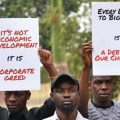
Four young members of Rooted in Resistance were arrested as they tried to deliver a petition urging Parliament to steer Uganda away from oil dependency toward an ‘oil-free economy’ built on economic freedom, sustainability, and active citizen involvement.
Ssembalirwa Aniwallh, Mugoya Hassan, Aron Patrick Ariong, and Okanya Ivan were taken into custody by parliamentary police early in the day as they marched toward Parliament to submit their petition.
According to Witness Radio sources, the four were detained nearly the entire day before being taken to Kampala Central Police Station.
The group aimed to persuade Parliament to rethink Uganda’s investment in petroleum extraction and infrastructure, insisting that true prosperity cannot survive on a resource that will run out.
In their petition, Rooted in Resistance invoked several provisions of the Constitution, including Article 38, which provides for citizens’ participation in the affairs of government, as well as provisions relating to freedom of expression and assembly, environmental protection, fair administrative treatment and the management of natural resources in the interests of present and future generations.
The activists point out that oil has long been touted as the answer to Uganda’s economic woes, promising jobs, industry, and progress. They warn these promises often fail to reach everyday Ugandans.
“Petroleum development carries significant economic, social and environmental risks and must be resisted. Our demand for an oil-free economy is not a rejection of development, but a demand for a different development model, one that places Ugandan citizens, productive sectors and sustainable wealth creation at the center of national planning,” the group says in its petition.
They highlight that petroleum development demands massive capital, depends on foreign corporations, and involves complex investments and sprawling infrastructure.
They say this approach falls short of creating the widespread jobs needed for Uganda’s fast-growing population.
They warn that relying on oil risks turning Ugandans into bystanders, watching their resources extracted instead of taking part in building the nation’s wealth.
“Economic freedom will be difficult to achieve through dependence on an exhaustible resource largely controlled through capital-intensive investments, multinational corporations and complex petroleum agreements,” the group argues.
Rooted in Resistance envisions an economy where Uganda invests in sectors that open doors for all citizens: agriculture, manufacturing, tourism, renewable energy, technology, and homegrown businesses.
They believe Uganda’s future should be rooted in its people, rich land, abundant water, vibrant biodiversity, and entrepreneurial spirit, not a resource destined to run dry.
The activists’ petition arrives at a pivotal moment, as Uganda speeds up its petroleum projects and prepares to launch commercial oil production.
Uganda discovered commercially viable oil deposits in 2006 and is now expected to begin commercial production in late September 2026.
As of June 30, 2026, the Tilenga project was 74 percent complete, with 234 wells drilled, exceeding the minimum 170 wells required for production.
The Kingfisher project had reached 79 percent completion. In comparison, the East African Crude Oil Pipeline (EACOP) stood at about 90 percent overall progress, with more than 1,443 kilometers of pipeline welded across Uganda and Tanzania.
In July, Irene Bateebe, the Permanent Secretary in the Ministry of Energy and Mineral Development, said Uganda remained on course to begin commercial oil production in September. As the country moves closer to its first barrels of commercially produced oil, environmental and social concerns continue to accompany the petroleum push.
Activists and researchers have sounded the alarm about oil development’s potential toll on communities, wetlands, wildlife, and Uganda’s precious biodiversity.
The activists urge Parliament to look past the lure of quick oil profits and reflect on the legacy Uganda will leave for generations to come.