
Media for Change Network
The program mobilizes rural and freelance journalists to embrace technology and build their capacities in ICT and Human Rights Based Approach and Investigative Journalism (HRBA+IJ) to promote localized human rights based content on journalists groups’ web-based platforms.
With financial support from United States Embassy, Kampala-Uganda, the network has connected ten (10) upcountry media associations with office Internet, a set of computer and a fully constructed and running website. Regions covered include; Northern Uganda, Rwenzori region, West Nile region, Teso-karamoja region, Southern Buganda region, Eastern Uganda region, Bunyoro region and greater Mubende region.
The network uses bottom-up approach to congregate local issues affecting local communities in the covered regions. Our goal is to spur public debate and discussions from regional to national levels through media campaigns and engagementsled by affected communities. Our campaigns are evidence-based with intention to empower communities to take a frontline role and directly engage governments and other stakeholders for change. Some of network members include; http://ujk-ug.org, http://ebja.org, http://westnilepress.org, www.numec.ug, http://sobuja.org, http://mja-ug.org and http://tekauganda.org among others.
More than 17,000 people in the Philippines face eviction from their ancestral land for a multimillion-dollar energy project.
Peruvian communities have launched a global petition to halt a mining project they say threatens the water supply of over 10 million people.
Oil about to flow but 2010 evicted Balaalo wait for compensation
‘Oil is a curse’: villages in Uganda face land ownership uncertainty
The 2nd edition of East Africa Business and Human Rights opens in Nairobi, highlighting the critical issue of African States’ limited participation in global treaty-making, which risks leaving the continent’s specific needs unaddressed.
World Environment Day 2026: Environmental Advocates warn of rising ecological costs arising from Uganda’s land-based investments.
NEMA ‘evictions’: how the process reveals NEMA’s mistakes and failures to ascertain whether people who have lived on their land in Kawaala since the 1940s are lawful occupants.
Buvuma residents drove off surveyors as they resisted the surveying of their land targeted for palm oil tree planting.
Innovative Finance from Canada projects positive impact on local communities.
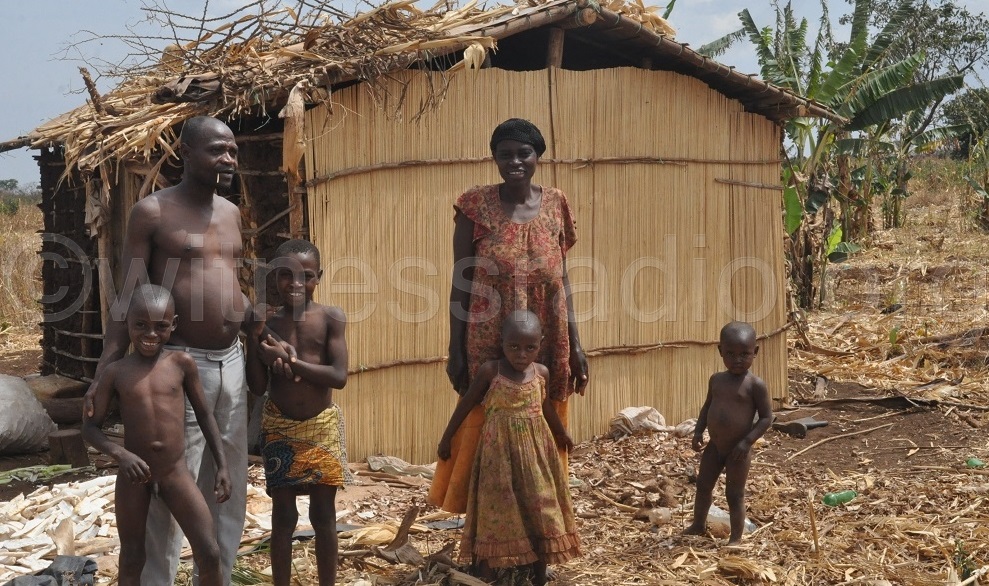
Over 5000 Indigenous Communities evicted in Kiryandongo District

Petition To Land Inquiry Commission Over Human Rights In Kiryandongo District

Invisible victims of Uganda Land Grabs
Resource Center
- CAN AFRICAN FOOD SYSTEMS THRIVE WITHOUT CHEMICAL FERTILISERS
- Land And Environment Rights In Uganda Experiences From Karamoja And Mid Western Sub Regions
- REPARATORY AND CLIMATE JUSTICE MUST BE AT THE CORE OF COP30, SAY GLOBAL LEADERS AND MOVEMENTS
- LAND GRABS AT GUNPOINT REPORT IN KIRYANDONGO DISTRICT
- THOSE OIL LIARS! THEY DESTROYED MY BUSINESS!
- RESEARCH BRIEF -TOURISM POTENTIAL OF GREATER MASAKA -MARCH 2025
- The Mouila Declaration of the Informal Alliance against the Expansion of Industrial Monocultures
- FORCED LAND EVICTIONS IN UGANDA TRENDS RIGHTS OF DEFENDERS IMPACT AND CALL FOR ACTION